Key takeaways
-
Indoor play is not second best: it is where kids build, pretend, create, read and play games together, which supports skills pediatricians care about.
-
Play builds skills: the American Academy of Pediatrics says play supports executive function and social, emotional, language and cognitive skills.
-
Playing together matters: the AAP notes that traditional toys that bring parents and children together support play and interaction better than digital toys.
-
Indoor play can be active too: the CDC recommends 60 minutes of activity a day for ages 6 to 17, and short active games at home help on rainy days.
-
Mix four types: building, pretend and creative play, games and puzzles, and active indoor games like a Pindaloo loop challenge (ages 9+).
When the weather turns, indoor play often gets treated as a backup plan for outdoor time. But play at home has benefits of its own. It is where kids build towers, put on shows, solve puzzles, invent stories and play games with their family around the kitchen table. This guide explains the main indoor play benefits, backed by guidance from the American Academy of Pediatrics and the CDC, and shares ideas for making indoor play rich and varied, including how to stay active in a small space. One of those ideas is the Pindaloo juggling skill game, which brings a quick movement challenge into any room with a little space.
Disclosure: this guide is published by Pindaloo, which makes the Pindaloo and Qubic4. The research cited is about play in general, not about any specific toy. We make no health claims for our products.
Indoor play benefits at a glance
|
Benefit |
What it looks like at home |
Background |
|---|---|---|
|
Thinking skills |
Puzzles, building, strategy games |
AAP: play supports executive function and cognitive skills |
|
Language |
Pretend play, storytelling, reading together |
AAP: play supports language skills |
|
Social and emotional skills |
Board games, family play, sharing |
AAP: play supports social and emotional skills |
|
Parent-child connection |
Playing together with traditional toys |
AAP, Healey et al., 2019 |
|
Fine motor skills |
Drawing, crafts, building bricks |
Everyday hand practice |
|
Movement on rainy days |
Active indoor games, dance, skill games |
CDC: 60 minutes of activity a day for ages 6 to 17 |
|
Calm and focus |
Puzzles, reading, quiet building |
A slower pace than outdoor play |
1. Play builds thinking skills
In its 2018 clinical report "The Power of Play", the American Academy of Pediatrics said that play supports executive function, the set of skills kids use to plan, focus, remember instructions and juggle tasks, along with social, emotional, language and cognitive skills (AAP). Much of that kind of play happens indoors: following building instructions, solving a puzzle, planning a move in a strategy game.
2. Pretend play and language
Indoor play is often pretend play: running a pretend restaurant, playing school or acting out a story with stuffed animals. Kids narrate, negotiate roles and invent dialogue, which gives them plenty of practice with words. Reading together and telling stories add even more.
3. Playing together strengthens connection
Indoor play is often family play. In a 2019 clinical report, the AAP noted that traditional toys that encourage interaction between parents and children support play and interaction better than digital toys (Healey et al., Pediatrics, 2019). A board game after dinner or a shared building project is time spent together, not side by side on screens.
4. Fine motor practice
Many indoor activities are hand activities: drawing, cutting, threading beads, pressing building bricks together and molding dough. These small, precise movements give little fingers lots of practice.
5. Calm, focused time
Indoor play tends to be slower than outdoor play, which makes it a good place for activities that ask for sustained attention: a jigsaw puzzle, a long building project or a chapter book. Calm play balances the high energy of outdoor games.
6. Movement, even on rainy days
Indoor play does not have to mean sitting still. The CDC recommends that children and teens ages 6 to 17 get 60 minutes or more of moderate-to-vigorous physical activity every day (CDC). On days when going outside is not an option, short active games at home help fill the gap: a dance party, an obstacle course of cushions, balloon volleyball or a skill game.
Indoor play vs outdoor play
|
Indoor play |
Outdoor play |
|
|---|---|---|
|
Typical pace |
Slower, more focused |
Faster, more active |
|
Best for |
Building, pretend play, games, reading, crafts |
Running, climbing, ball games |
|
Social side |
Family time, small groups |
Larger groups, neighborhood play |
|
Weather |
Any weather |
Depends on weather |
|
Space |
Limited, needs planning for active play |
Open |
The best week includes both. For the other half of the picture, see our guide to the benefits of outdoor play.
The best types of indoor play
Building and construction
LEGO, magnetic tiles, wooden blocks and marble runs let kids plan, build, test and rebuild. Leave a project out for a few days so it can grow.
Pretend and creative play
Dress-up boxes, play kitchens, puppets, art supplies and modeling dough give kids the raw material for their own ideas.
Games and puzzles
Board games, card games and puzzles teach turn-taking, rules and strategy. Qubic4 is a good example of a quick family strategy game: it takes four-in-a-row into three dimensions with wooden cubes, 32 per player, and the first to build a horizontal, vertical or diagonal line wins. It is a fast duel that kids and adults can play on equal terms. The Qubic4 3D board game costs $25.90.
Active indoor games
Active indoor play burns energy and breaks up long sedentary stretches. Try dance breaks, cushion obstacle courses, balloon games and skill games.
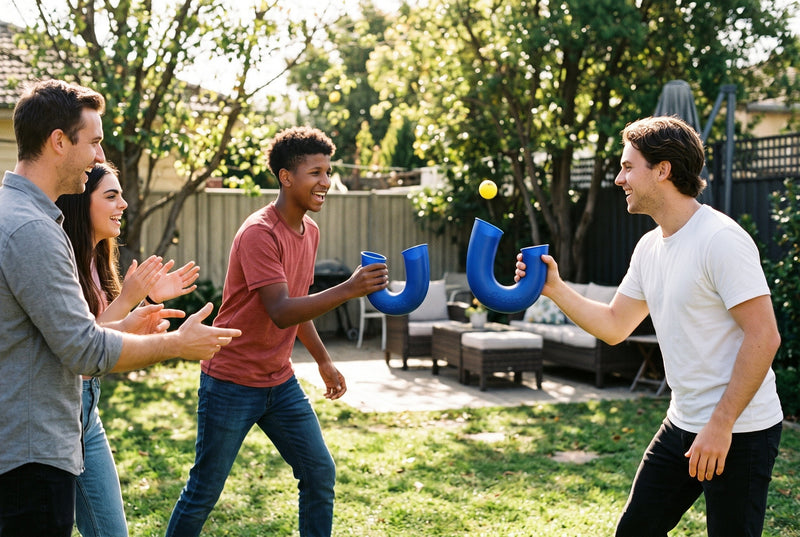
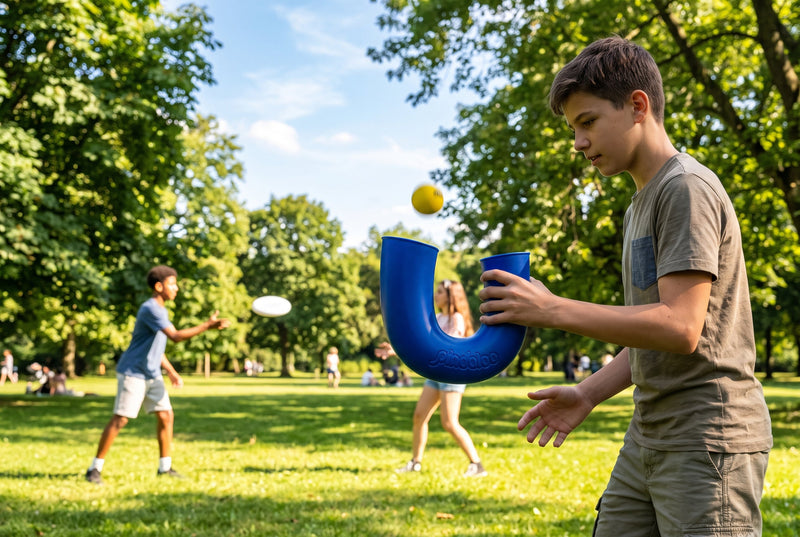
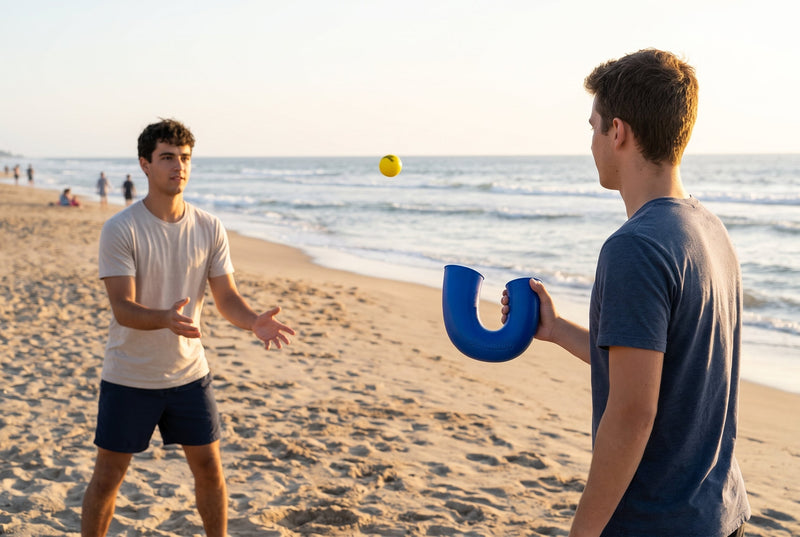
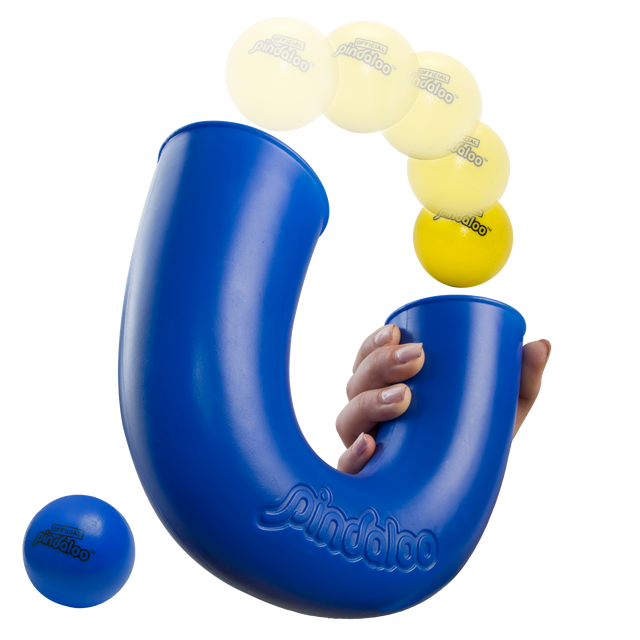
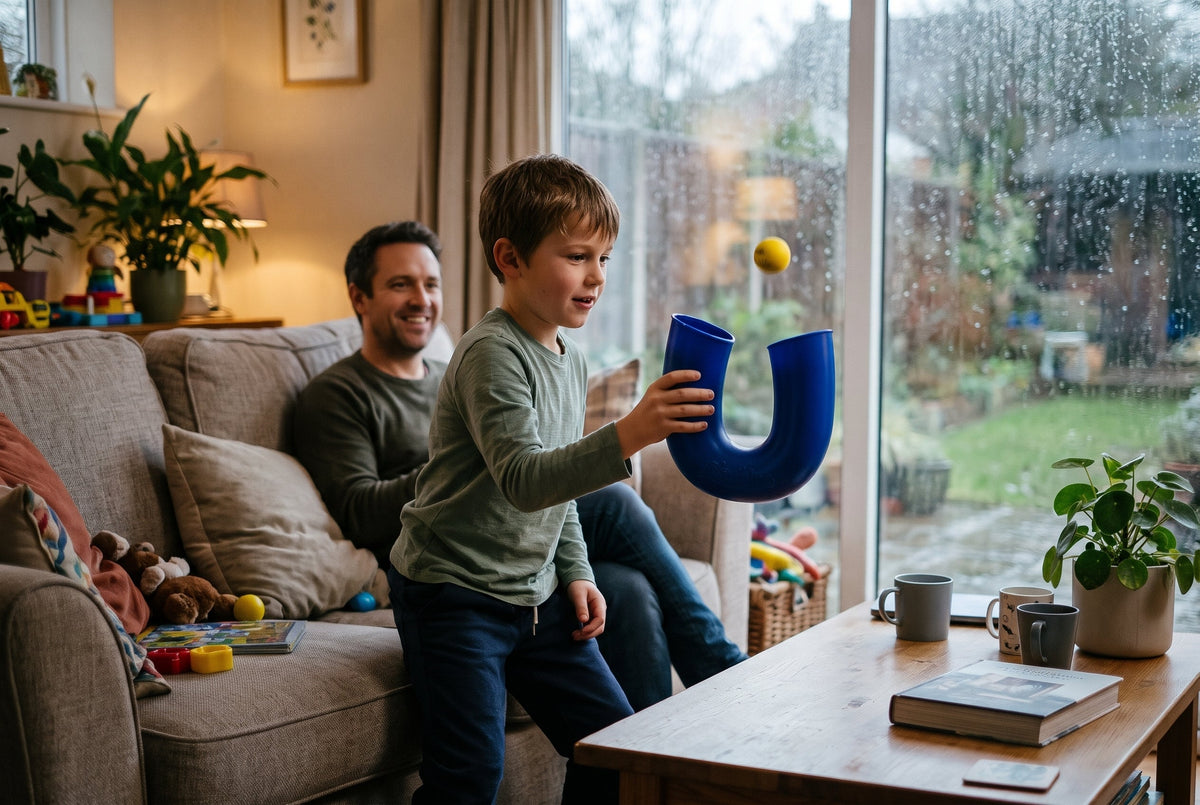
The Pindaloo is a skill game that works well indoors with a little care. It is a precisely designed curved tube held in one hand: you flip a ball out of one end, it loops over the top and you catch it back inside. Each catch counts as one loop, so kids always have a score to beat. The game requires fast decision-making and hand-eye coordination, and a few minutes of loops make a good movement break between homework or quiet activities.
For indoor play, choose a room with a clear space, away from lamps and other breakables, and play over carpet or a rug so drops stay quiet and close. The blue Pindaloo juggling skill game costs $32.90 and is rated for ages 9 and up.
How to make indoor play better
Create a play space. A corner with a rug, a low shelf and a few toys within reach invites kids to play on their own. Rotate toys every couple of weeks so old favorites feel new again. Plan one active game per day, especially on rainy days. Play with your kids when you can: a short game together often launches a long stretch of independent play. Limit background screens, since a TV left on competes with play for attention.
FAQ
What are the benefits of indoor play?
Indoor play gives kids time to build, pretend, create, read and play games with family, which supports many important skills. The American Academy of Pediatrics says play supports executive function and social, emotional, language and cognitive skills, and that traditional toys that bring parents and children together support play and interaction better than digital toys. Indoor play also offers fine motor practice, calm and focused time, and, with active games, a way to keep moving on rainy days.
Is indoor play as good as outdoor play?
Indoor and outdoor play offer different benefits, and kids do best with both. Outdoor play gives more space to run, climb and play big group games, which usually means more physical activity. Indoor play is better suited to building, pretend play, crafts, reading and board games, which ask for focus and fine motor control. On days when kids stay inside, adding short active games helps them get closer to the CDC recommendation of 60 minutes of activity a day for ages 6 to 17.
How can kids stay active indoors?
Kids can stay active indoors with short, energetic games: dance parties, cushion obstacle courses, balloon volleyball, hallway hopscotch with tape, yoga for kids and skill games. The Pindaloo is a good option for kids 9 and up, since loops need only a small clear space; play over a rug and away from breakables. Spreading a few short active breaks through the day works well, especially between homework and quiet activities.
What are good indoor activities for kids?
Good indoor activities for kids include building with LEGO or magnetic tiles, pretend play with costumes and play kitchens, drawing and crafts, reading together, puzzles, board games and card games, plus active games like dancing, obstacle courses and skill games. Strategy games like Qubic4 make quick family duels, and the Pindaloo adds a movement challenge for kids 9 and up. Rotating activities keeps indoor time fresh.
How much screen time is too much during indoor play?
There is no single number that fits every family, and the AAP encourages families to make a family media plan based on their own needs. During indoor play time, it helps to turn off background TV, keep tablets out of the play space and offer engaging screen-free options like building sets, games and skill toys. If you have questions about your child's screen use, your pediatrician can help.
Make home a place to play
Indoor play is more than a rainy-day fallback. It is where kids build, imagine, create and play together, and where families find time for games and connection. Set up a simple play space, mix building, pretend play, games and active play, and join in when you can. For a quick movement challenge on indoor days, try a Pindaloo. Pick up a red Pindaloo juggling game and start a living room loop record.